
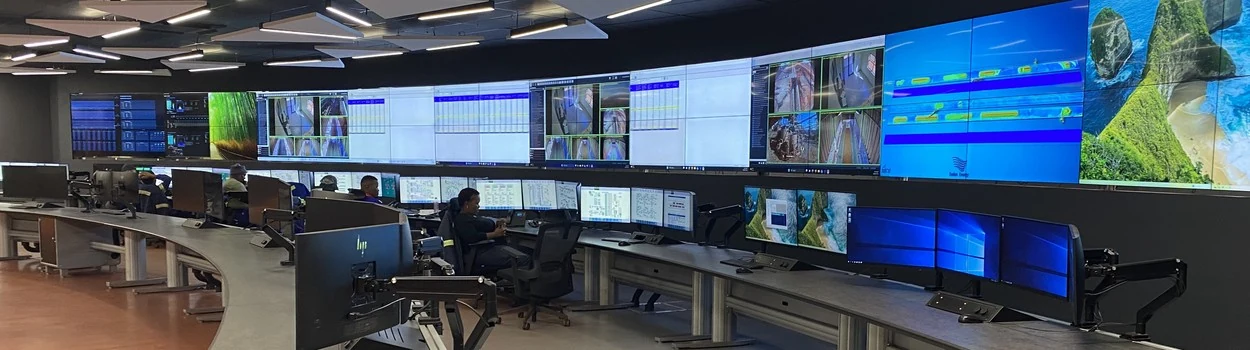
Most control rooms are not designed once and left alone. Screens get added, systems are bolted on, a desk is squeezed in for a new function, and after ten years the room works despite its layout rather than because of it. Nobody decides the room has stopped working. It drifts.
A control room assessment is the step before spending money: a structured look at how the room is used today and where it lets operators down. Here are five signs it is time for one.
1. Operators have rebuilt the room themselves
Look for screens propped on boxes, tablets taped to desk edges, a radio moved closer to one position, or a printed list stuck to a monitor. Each one is an operator solving a design problem the room did not. They tell you where the layout no longer matches the work.
2. The overview wall is ignored
If operators rarely look up, the wall is either showing the wrong things or showing too much. An overview should give everyone the same picture of the plant at a glance. When it becomes a place to put CCTV feeds nobody watches, the shared picture is lost and operators each build their own.
3. People complain about glare, noise or fatigue
Reflections on screens, a door that bangs, an air-conditioning vent above one desk, a room that is too warm by the end of a night shift. These sound minor, but over a twelve-hour shift they wear down attention. They are also often the cheapest problems to fix.
4. New systems were added without a plan
Every new system adds screens, keyboards and alarms. If they were added one at a time, operators may now reach across each other, switch between three keyboards, or hear alarms they cannot place. The question is not whether each system works, but whether the room still lets one person manage all of them.
5. Something went wrong and the room played a part
After an incident or near miss, the investigation usually looks at procedures and people. It is worth asking whether the room helped or hindered. Could the controller see what they needed? Could they hear the emergency line? Were the right people able to reach the desk? For underground mines, Chapter 16 sets specific requirements for the emergency control room, and an assessment is a good time to check against them.
What an assessment gives you
A good assessment ends in a written finding and a short list of options, smallest first. Sometimes regrouping positions or changing what is on the screens solves the problem. Sometimes fixing glare matters more than new furniture. Sometimes the room really does need a full upgrade, and then the assessment becomes the brief, so nothing operators rely on today is lost in the new design.
It does not require a shutdown. The point is to watch the room working, including how operators handle a plant upset.
If any of these signs sound familiar, our control room assessment is where to start.