
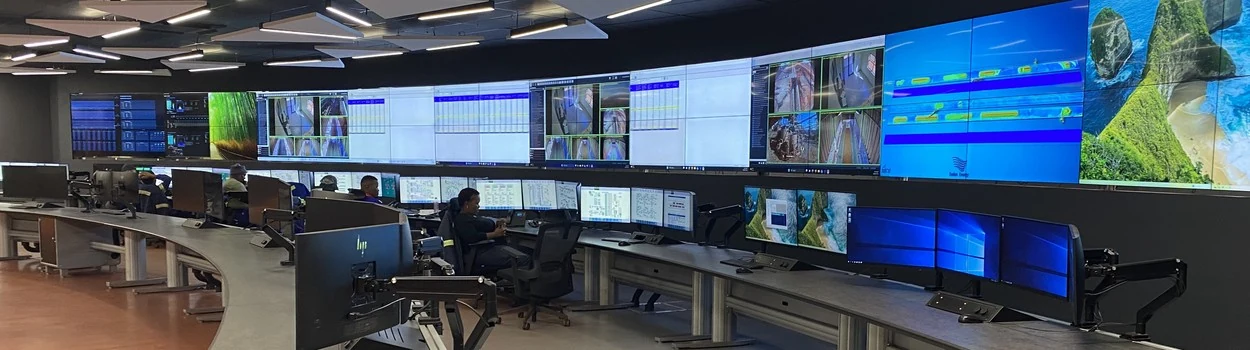
Chapter 16 of the Mine Health and Safety Regulations now requires every underground mine to identify an emergency control room that meets nine minimum requirements. The first design question most mines face is a simple one: do we use the production control room we already have, or set up a separate room?
There is no single right answer. But the regulation changes the trade-offs, and it is worth deciding deliberately rather than by default.
What the regulation asks of the room
Regulation 16.5(1)(j) requires, among other things, that the room holds an up-to-date ventilation and rescue plan, has communication to a potential fresh air base and a second, independent communication system to outside parties, and has an emergency line with a distinct ring tone. During an emergency it must be under the control of a person holding a Mine Manager’s certificate, a competent person must record events and instructions in sequence, and only authorised people directly involved may be present. We summarised all nine in Nine things your emergency control room must now have.
Several of these sit uneasily with how a busy production control room works on a normal day.
The case for using the production room
- The systems are already there. SCADA, gas monitoring, CCTV, radio and telephony usually terminate in the production room. Duplicating them elsewhere costs money and creates a second set of things to maintain.
- The people are already there. The operators who know the plant are the people the emergency team needs to consult.
- Time matters. Moving an emergency response to another room in the first minutes is a delay you cannot afford.
The case for a separate room
- Access control. Only authorised, directly involved people may be present. A production room with visitors, contractors and shift changes is hard to clear quickly.
- Different leadership. In an emergency the room is run by the Mine Manager’s certificate holder, not the shift controller. Two command structures in one room cause confusion.
- Recording. A clean record of every event and instruction is easier to keep in a quieter room with a dedicated recorder’s position.
- Production still needs running. Surface plant, hoisting and ventilation still need operators while the emergency is managed.
The option many mines end up with
In practice, many mines choose a middle path: an emergency room directly next to the production control room, with sight of the overview display, its own access control, its own recording position, and the second communication path terminating there. The production room keeps running the plant. The emergency team sits next door with everything it needs, without standing behind operators.
Where space rules that out, a production room can be designed to switch modes: defined emergency positions, a door that can be controlled, a recorder’s desk, and a clear rule for who leaves when the emergency line rings.
Decide before you design
Whichever route you take, decide it before buying anything. The choice drives where communications terminate, how the room is laid out, how access works and what the emergency procedure says. None of the nine requirements is about equipment, and Chapter 16 does not require a video wall. It requires a room that works on the worst shift of the year.
If you are reviewing your emergency control room against Chapter 16, our emergency control room design service starts with a readiness review of your room and procedures.
This article is a summary for discussion and is not legal advice. The regulation is Notice 6052, Government Gazette No. 52388, 28 March 2025.